
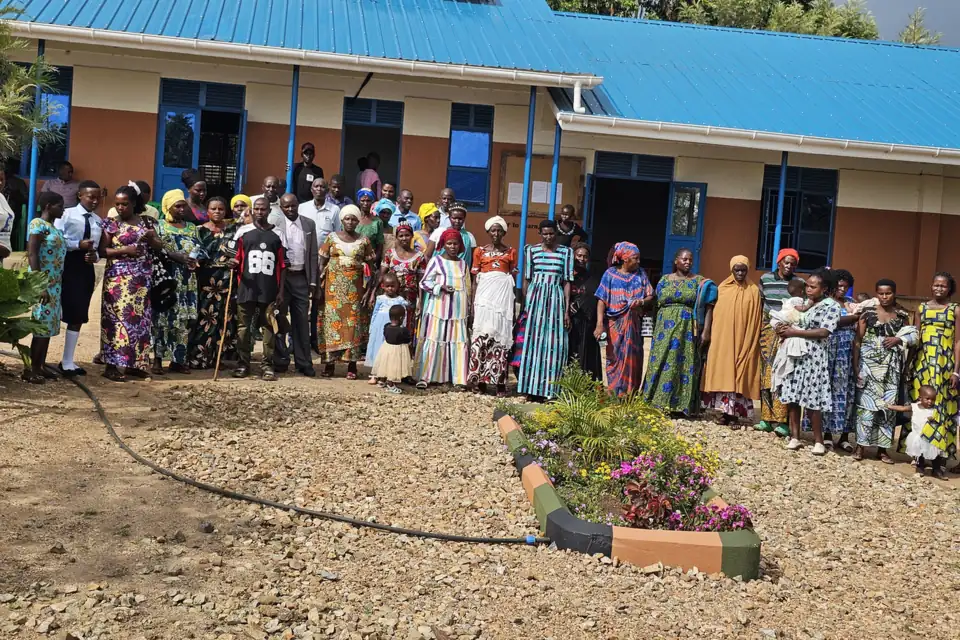
Spectrum XLabs Alliance (SXLA), the organisation that develops the Junior Entrepreneurs Program (JEP)
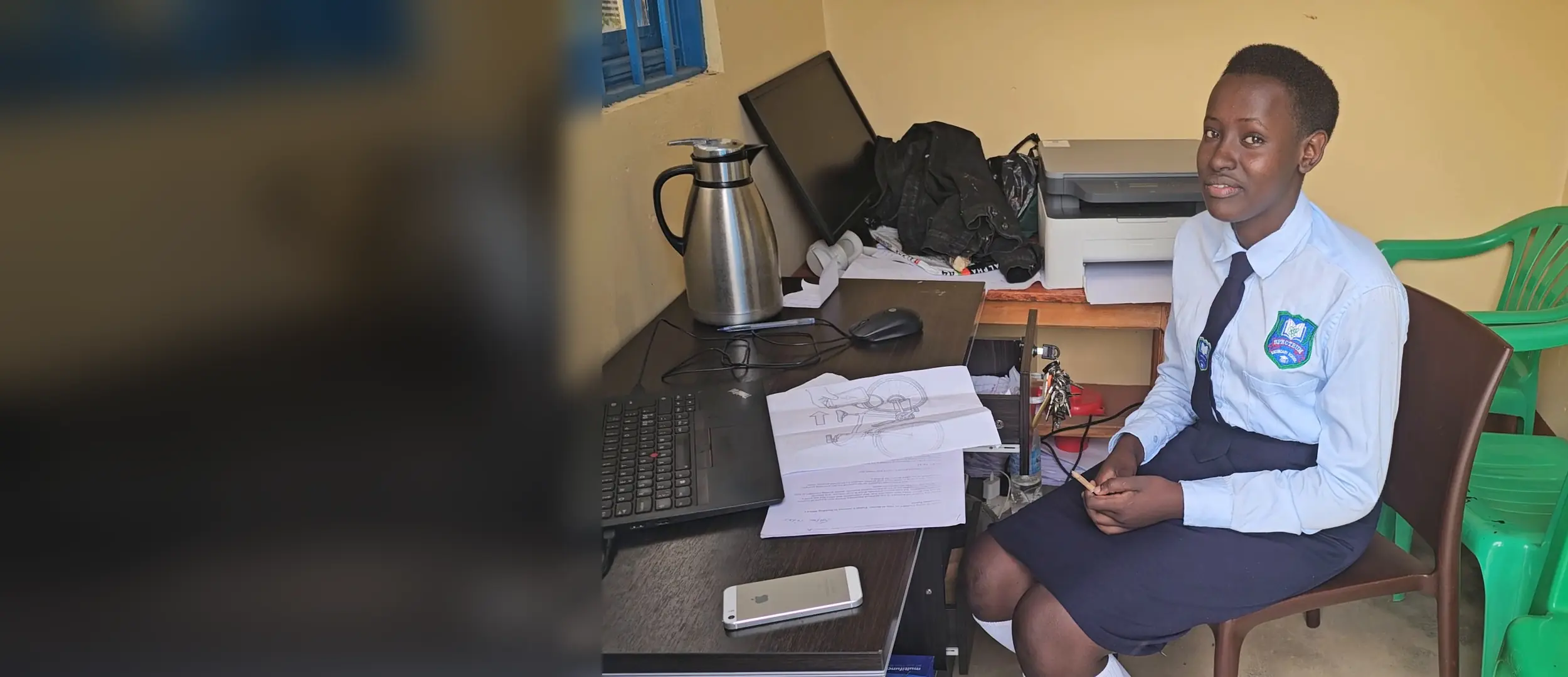
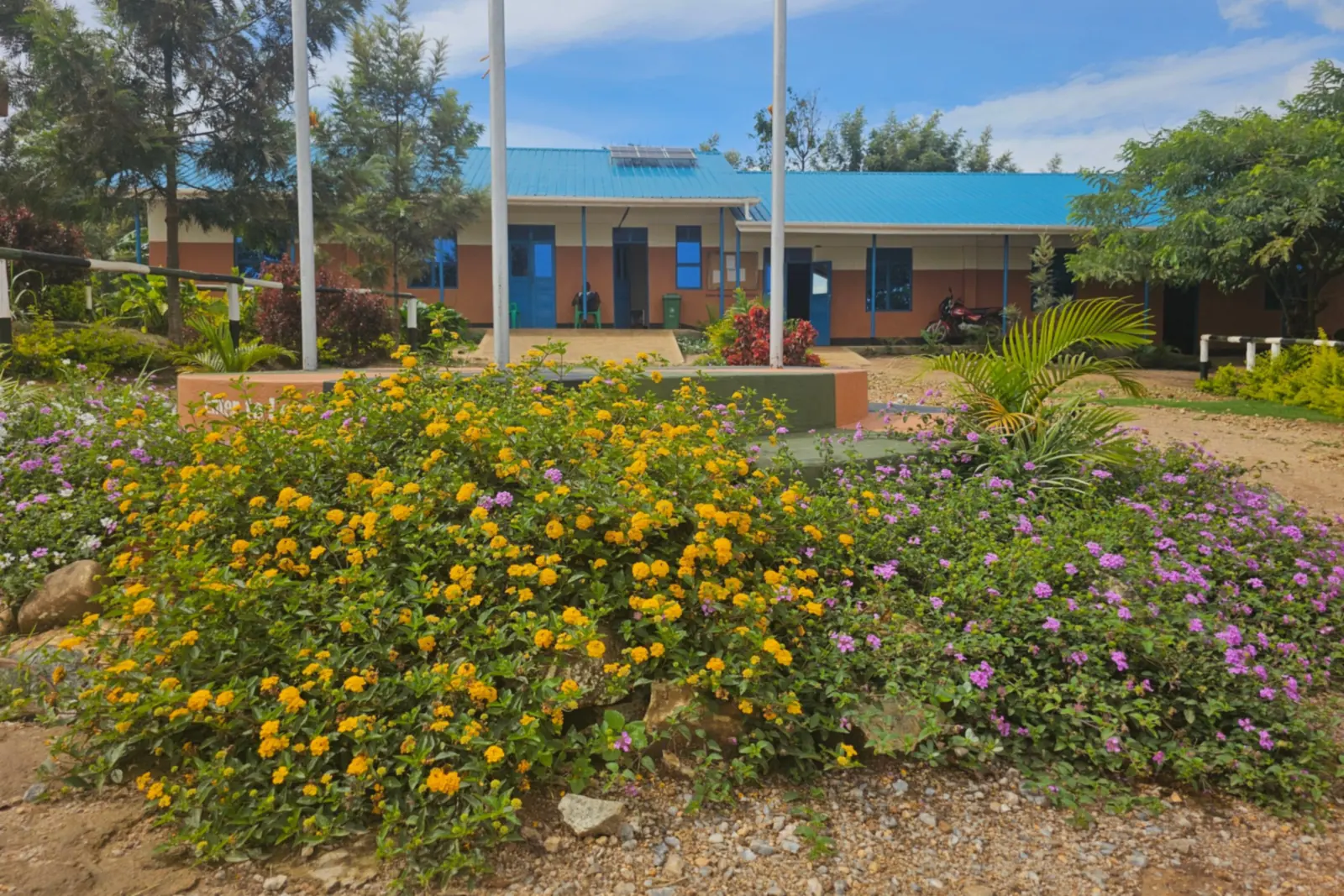
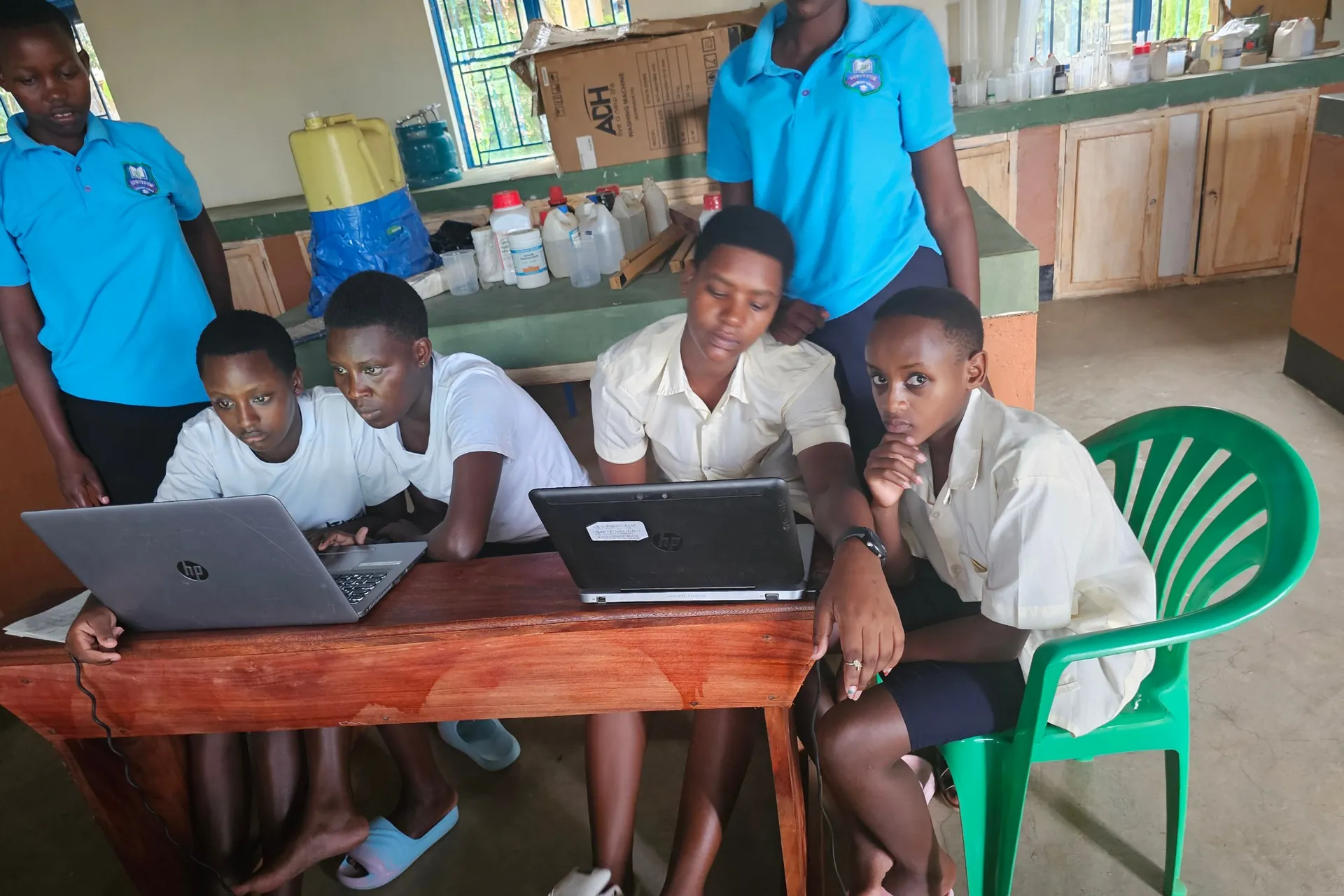
1 / 7
1. The challenge
Young people live with real challenges. School rarely helps with them.
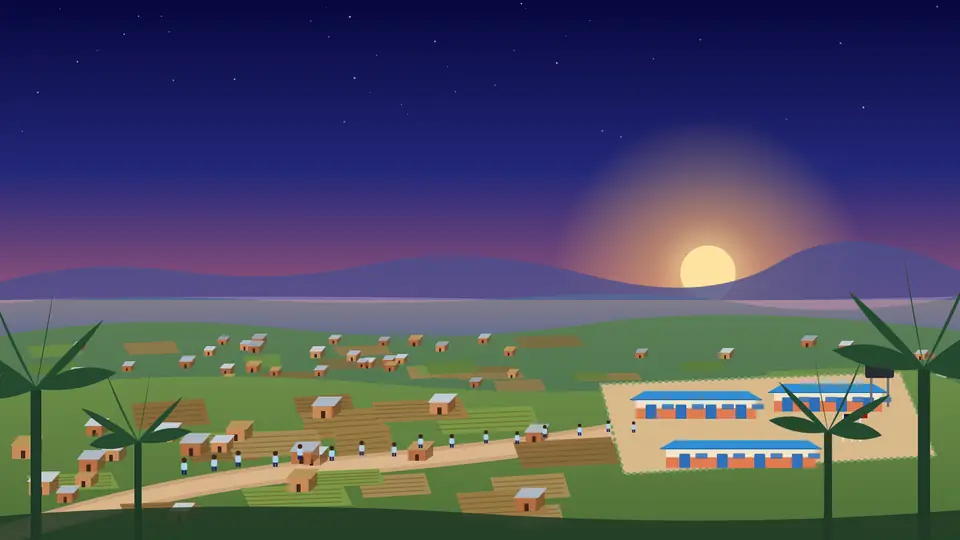
In Kyangwali, young people live with small plots that grow too little food, scarce water and energy, and too little income. Learners leave school able to recall, not yet able to use what they know, and many will need to create their own work.
- 16.7%youth unemployment, ages 15 to 24, UgandaUBOS, Census 2024 (published 2025). Measured. Read Original Research (UBOS, opens in a new tab)
- 47.1%of employed people in Uganda work for themselves, without employeesUBOS, Labour Force Survey 2021. Measured. Read Original Research (UBOS, opens in a new tab)
2. The response
SXLA, and why it developed JEP
SXLA developed the Junior Entrepreneurs Program (JEP) from its Founder's discomfort with how school separates classroom learning from the real problems students live with. Brainy Swaibu studied and taught in Kyangwali: school gave him knowledge, but not the skills, tools and mindset to use it.
JEP is a way of learning, not a separate organisation or partnership.
"Create the conditions that make a learner want to know. Then teach them how to find out."
- AI and technology are tools, not the purpose.
- Entrepreneurship is one possible pathway, not the destination.
- Teachers remain central: they teach, question, guide and give feedback.
- SXLASpectrum XLabs Alliance
- Develops JEPInside the national curriculum
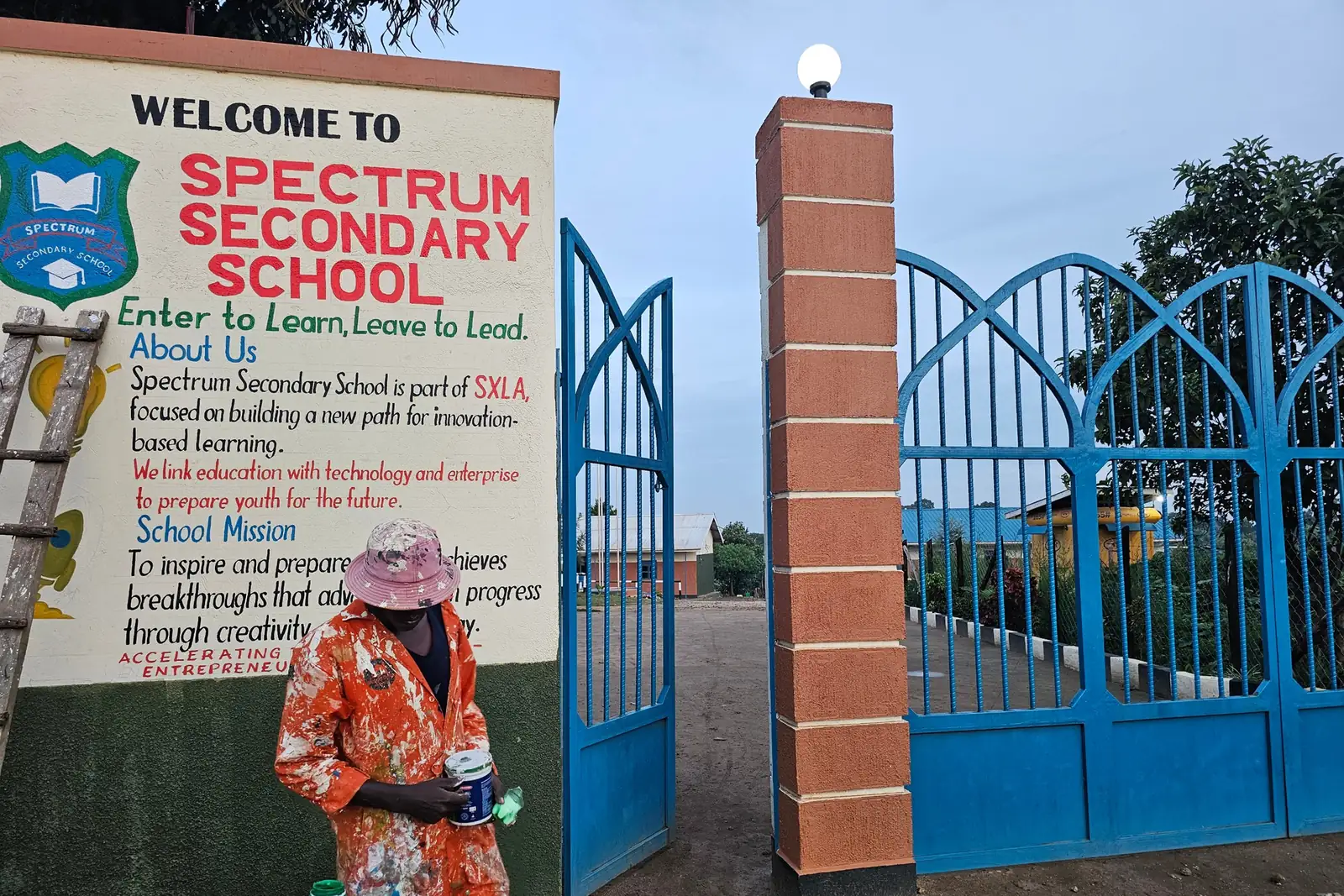
- Schools implement or adapt JEPStarting with Spectrum Secondary School
- Students investigate problems and develop solutionsS1 to S4
3. The educational idea
Everyday discomforts become reasons to learn
When a teacher pays attention to an everyday discomfort, it becomes a reason to learn. JEP turns it into a seven-step loop, with teachers teaching the curriculum knowledge learners need when they need it.
DISCERNPROMPTPROTOTYPEFEEDBACK
- REALITYNotice a real situation.
- QUESTIONAsk what is happening, and why.
- KNOWLEDGEFind and check the knowledge needed.
- TOOLSChoose tools, including AI.
- ACTIONBuild, try or make something.
- FEEDBACKTest it and ask for advice.
- IMPROVEMENTImprove; new questions begin.
4. The method
Four changes in school, and one practical cycle
JEP asks schools to make four changes, one for each missing support.
- Gap: No one asks about it
Ask learners about their discomforts and challenges
- Gap: No project method
Help learners investigate problems and test solutions
- Gap: No tools or resources
Provide tools and resources
- Gap: Exams on other problems
Connect assessment to the problems learners investigate
How a JEP project works in practice
The JEP learning cycle, DISCERN, PROMPT, PROTOTYPE and FEEDBACK, in six everyday steps.
- DISCERN
Step 1: Identify
Name a real challenge and why it matters.
- DISCERN
Step 2: Investigate
Study what is happening and why.
- PROMPT
Step 3: Design
Learn what is needed, then plan a solution.
- PROTOTYPE
Step 4: Prototype
Build a first, simple version.
- FEEDBACK
Step 5: Test and improve
Test, get feedback and improve.
- FEEDBACK
Step 6: Create impact
Share what works; new questions begin.
5. A concrete example
Baraka's small plot
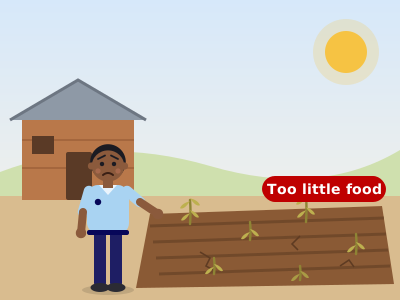
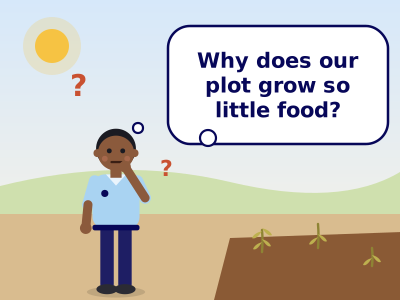
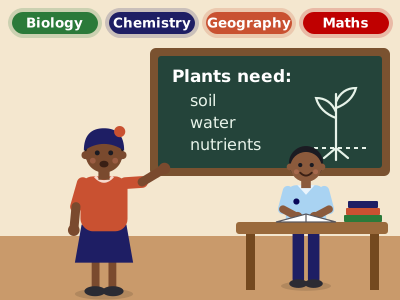
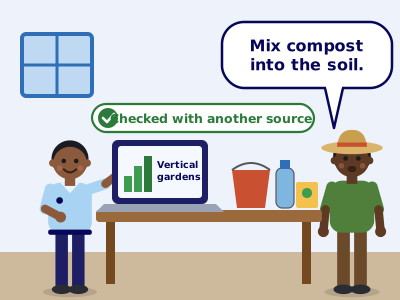
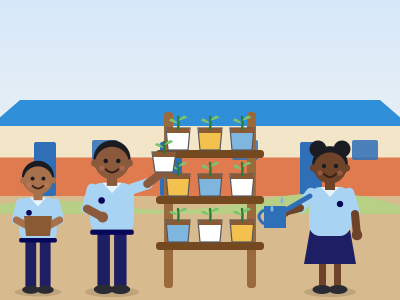
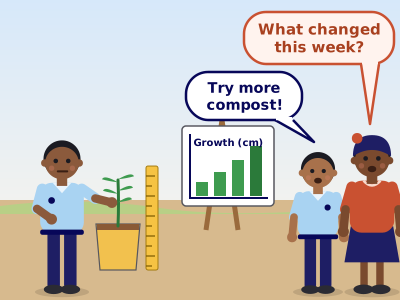
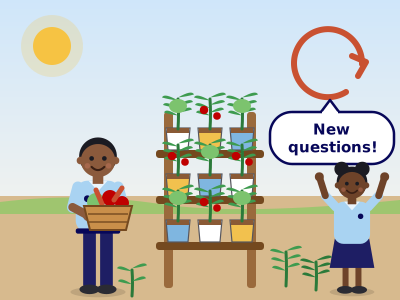
Baraka's family plot grows too little food. With his teacher, he investigates soil, water and crops, learns the biology and mathematics he needs, then builds, tests and improves a container garden. A future enterprise is a possibility, not a promise.
Baraka is an illustrative learner, not a real person.
Follow Baraka, an illustrative learner, through the seven steps
6. Implementation
How schools adopt or adapt JEP
Other schools can adopt or adapt JEP, keeping the essentials: real challenges, curriculum knowledge when it is needed, and the JEP cycle.
- Today: Spectrum Secondary School, 40 JEP Scholars.
- From 2029: partner schools, through the Hub-and-Box Model and JEP Mobile Kit, after the 2027 review.
- Now: schools can register interest.
7. The learning environment
Spectrum Secondary School today: where JEP runs now
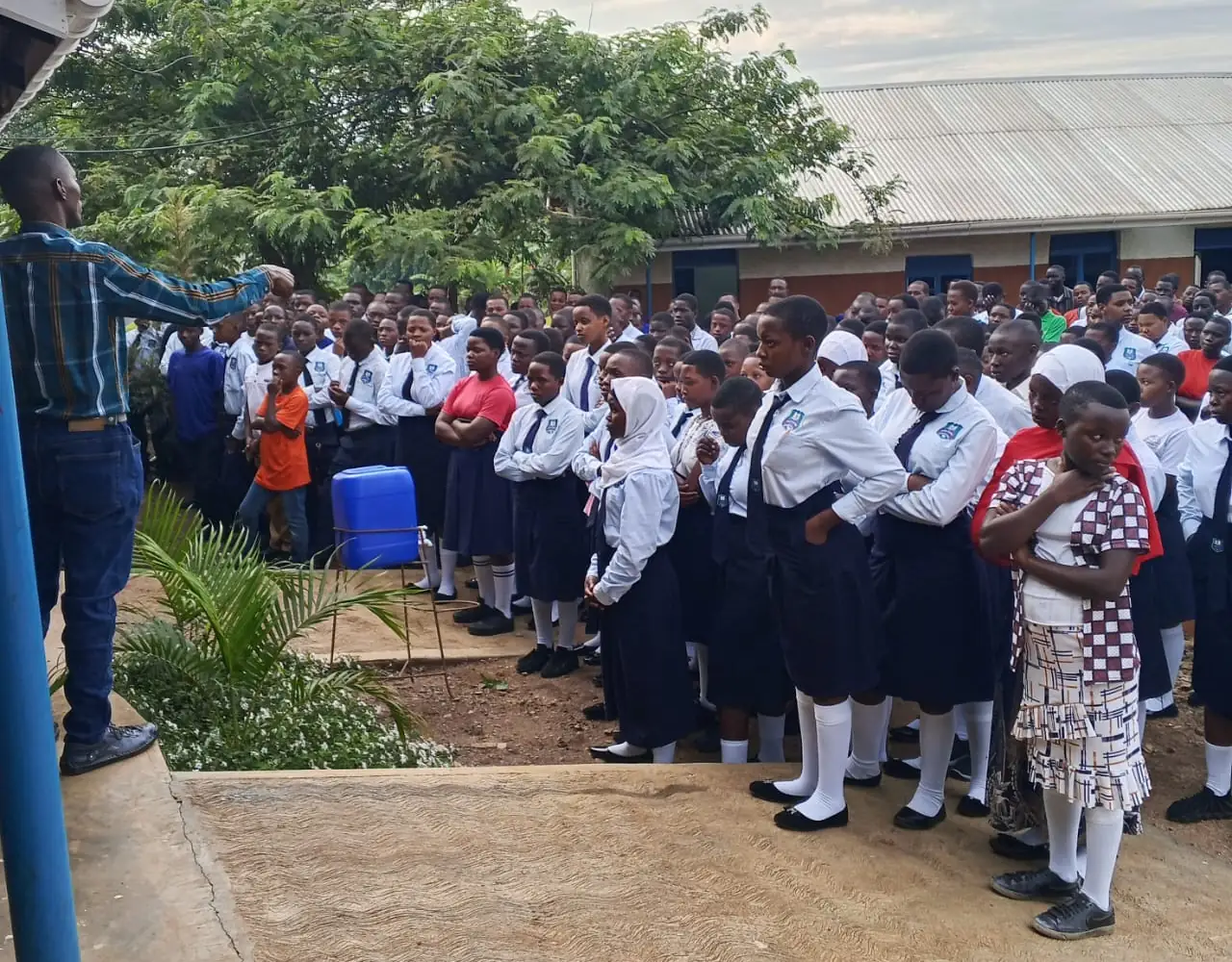
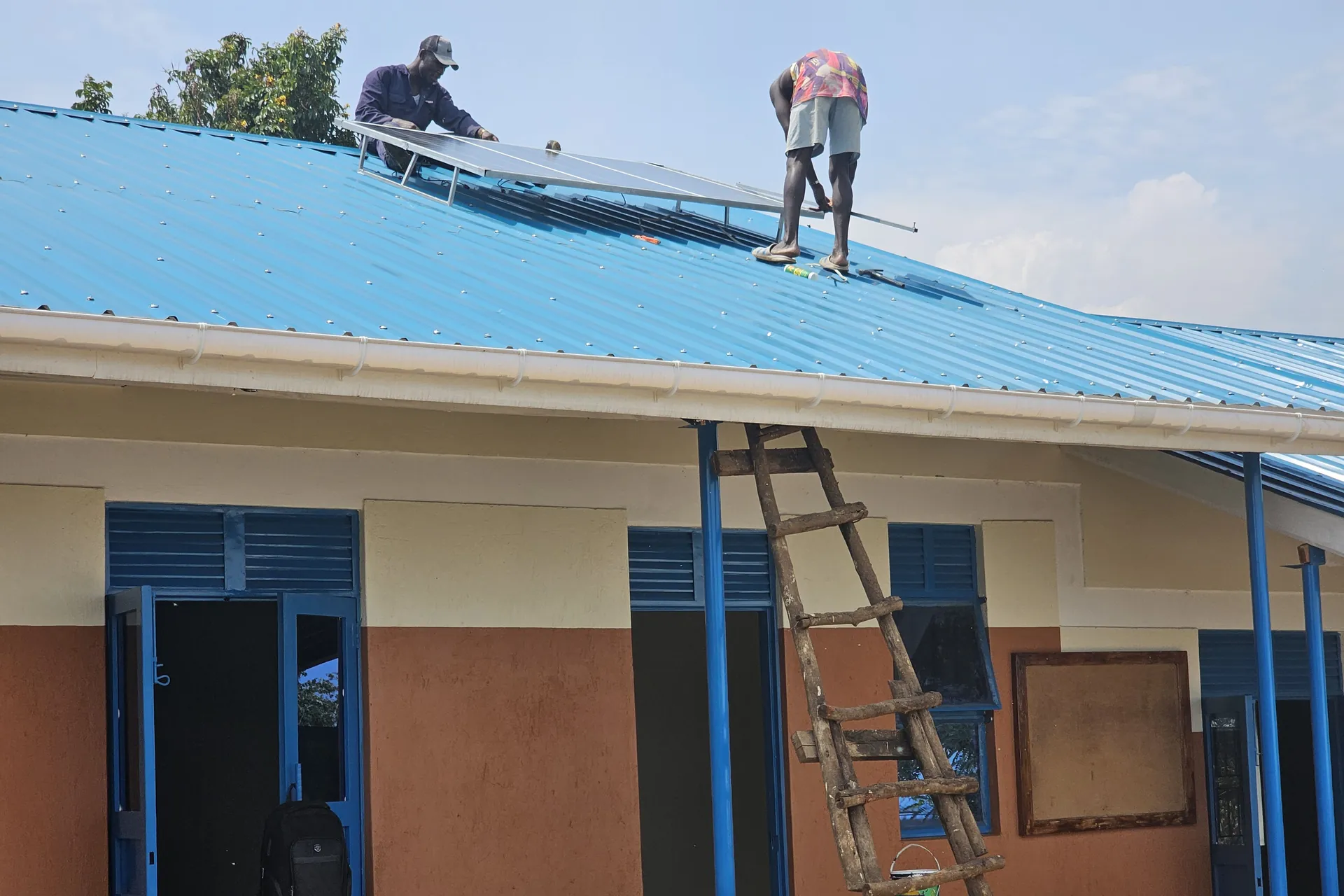
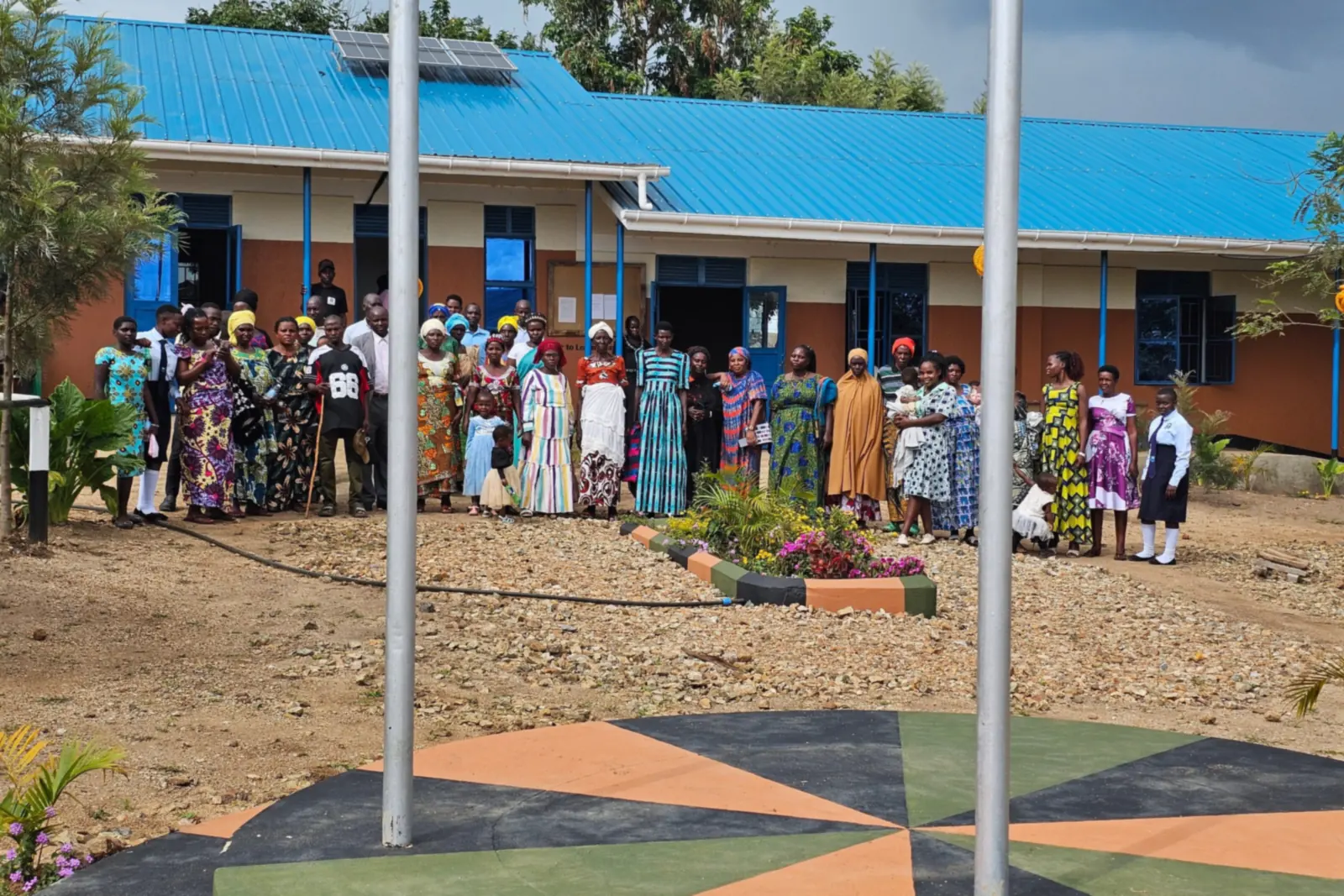
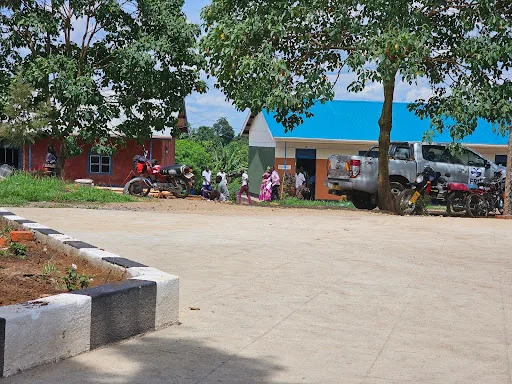
Refugee and host-community learners study together, S1 to S4, on the national curriculum. JEP runs today with 10 laptops (5 working) and one portable Wi-Fi unit.
- 277learners at Spectrum Secondary SchoolTerm One 2026 (up from 102 in 2025)
- 65%refugee learners (181)Term One 2026
- 41%girls (113)Term One 2026
- 40JEP ScholarsTerm One 2026
- 156,248residents of KyangwaliUNHCR and OPM proGres, 28 February 2026
Planned
A campus designed around JEP from the start
Two planned schools on 5 acres in Kyentare, Hoima City: MTP Secondary School and the MTP Advanced Academy. Both are long-term plans. The necessary resources and partners are being sought to meet the planned timeframe. Stay tuned for updates.
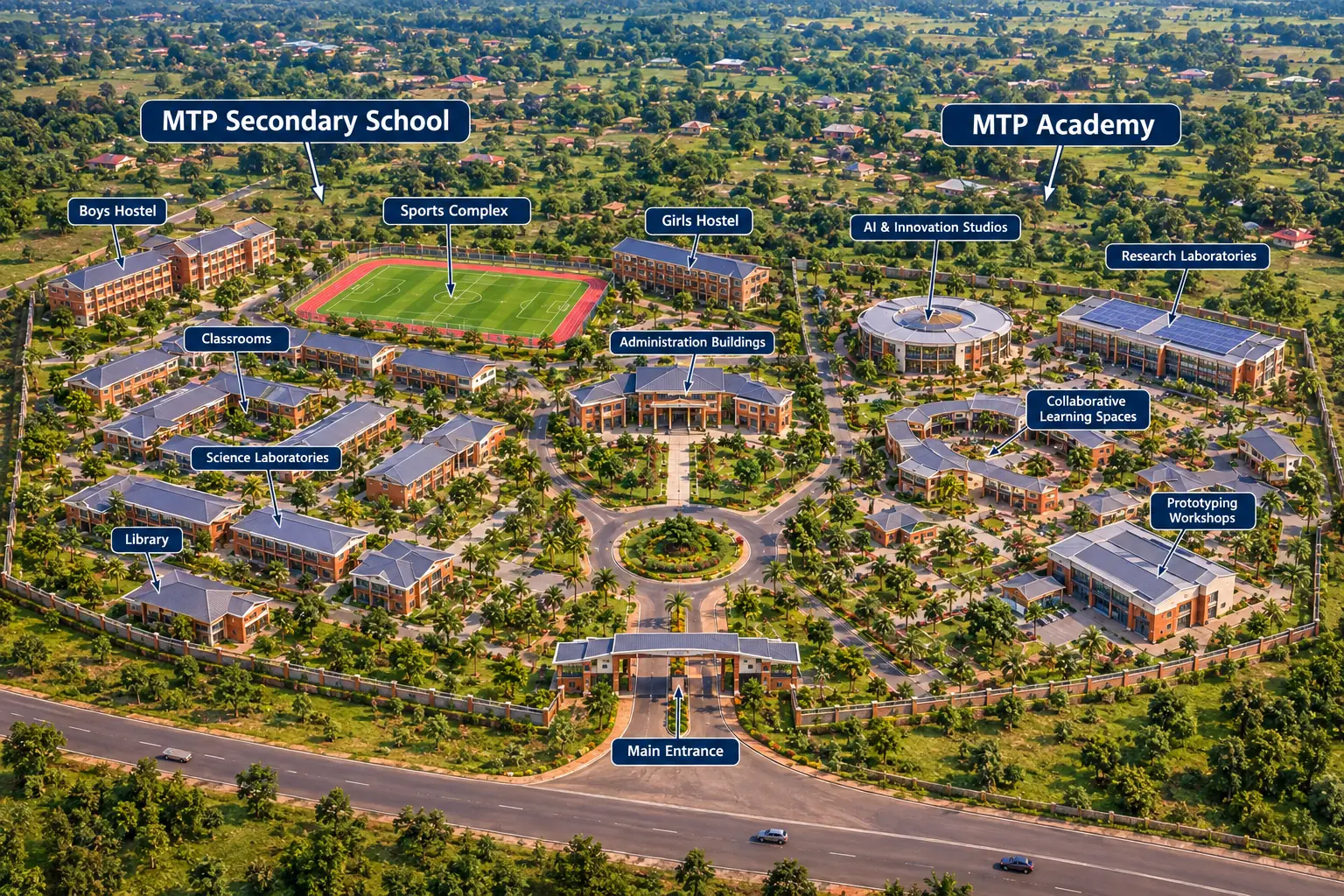 Proposed campus concept, not an existing buildingSelect to enlarge
8. Outcomes
What learners develop, and what we can show so far
Not every learner will start a business, and JEP does not expect them to.
Entrepreneurial capabilities
- Problem-solving
- Initiative
- Creativity
- Financial understanding
- Building useful solutions
Forms of impact
- Better practices at home or at school
- Community interventions
- Research
- Products
- Services
- Enterprises, for some
Where the evidence stands. JEP is at an early stage. SXLA's internal 2025 assessment rated JEP learners 1.5 levels above peers on average, not yet independently verified. A baseline and comparison group start in 2027. See the Evidence
Stories and news
Featured Stories & News
SXLA news, learner projects and research on learning and work.
From SXLA
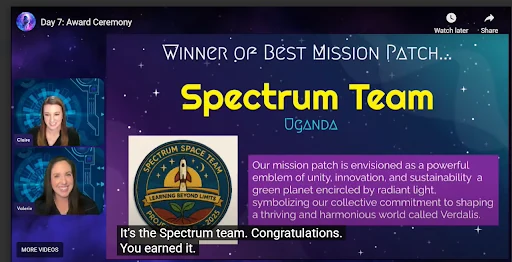
Best Mission Patch award
Two JEP learners designed a mission patch for an international space design competition and won its Best Mission Patch award. For SXLA’s Founder, it showed that exposure can reveal ability.
Spectrum XLabs Alliance
Read the Story: Best Mission Patch award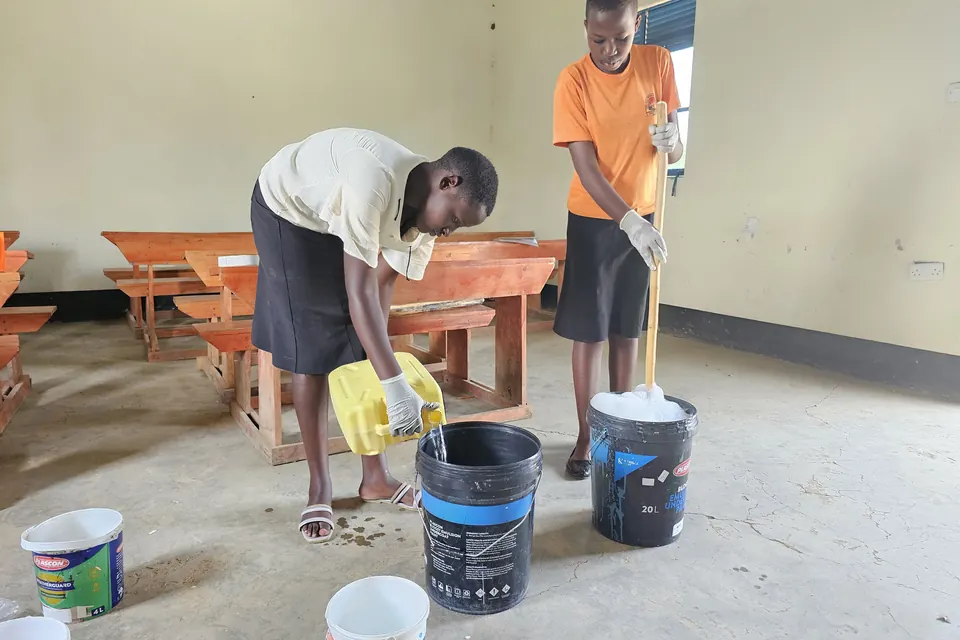
The S4 liquid soap team
An S4 team makes the school’s liquid soap, replacing costly, late suppliers. The school buys the ingredients and pays the team a small labour fee: a real need, met by learners.
Spectrum XLabs Alliance
Read the Story: The S4 liquid soap team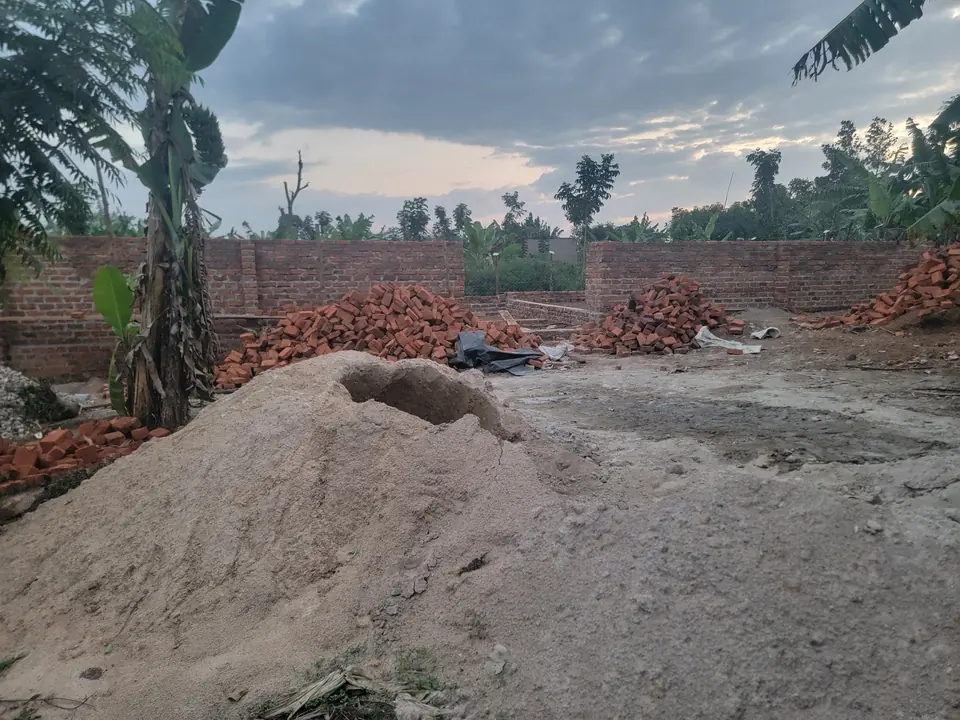
Boys’ dormitory under construction
Construction of a new boys’ dormitory at Spectrum Secondary School began after funds arrived in August 2026. US$40,800 is still needed to finish the dormitory, a boys’ latrine and beds for boys and girls.
Spectrum XLabs Alliance ·
View SXLA Update: Boys’ dormitory under constructionFrom the research
Skills are changing fast, and AI skills fastest
More than 1,000 employers in 55 economies expect 39% of workers’ core skills to change by 2030, with AI and big data growing fastest. A global projection, not specific to Uganda.
World Economic Forum ·
Explore the Research: Skills are changing fast, and AI skills fastest (opens in a new tab)Young people out of work and study in Bunyoro
Census 2024 figures show that 48.2% of young people aged 18 to 30 in Bunyoro sub-region, which includes Kikuube and Hoima, are not in employment, education or training.
Uganda Bureau of Statistics ·
Explore the Research: Young people out of work and study in Bunyoro (PDF) (opens in a new tab)Uganda’s digital education gap
Of 3,276 secondary schools assessed, more than one in three have no internet access, with one digital device for every 63 students on average. Offline-first learning, such as EDGE, is designed for this gap.
UNICEF Uganda ·
Read the Story: Uganda’s digital education gap (opens in a new tab)9. The invitation
Find your way
Judge us by the evidence we produce, and help us build it. Start with the route that fits you.
Learners
Your questions and ideas can become real projects.
Parents and families
What JEP means for your child, in plain words.
For parents and familiesAsk us on WhatsApp (opens WhatsApp in a new tab)
Teachers and school leaders
What a school needs to start, with or without devices.
Government and education officials
How JEP sits inside the national curriculum, and its status today.
Development and humanitarian partners
Context, governance, evidence, and where a partner could help.
Technology and research partners
Open technical questions in the EDGE and Mobile Kit specifications.
Donors and volunteers
Help finish the dormitory, equip the Studio or give your time.
Keep in touch
For occasional updates, email or WhatsApp us. You can ask us to stop at any time. Privacy notice.
Help a learner turn discomfort into knowledge, action and value
Your gift helps finish the boys' dormitory, equip the Hybrid Edge JEP Studio and complete Spectrum Secondary School. Donations are completed on the website of Spectrum TechLabs Alliance (STA), our US-based partner.