JEP Mobile Kit
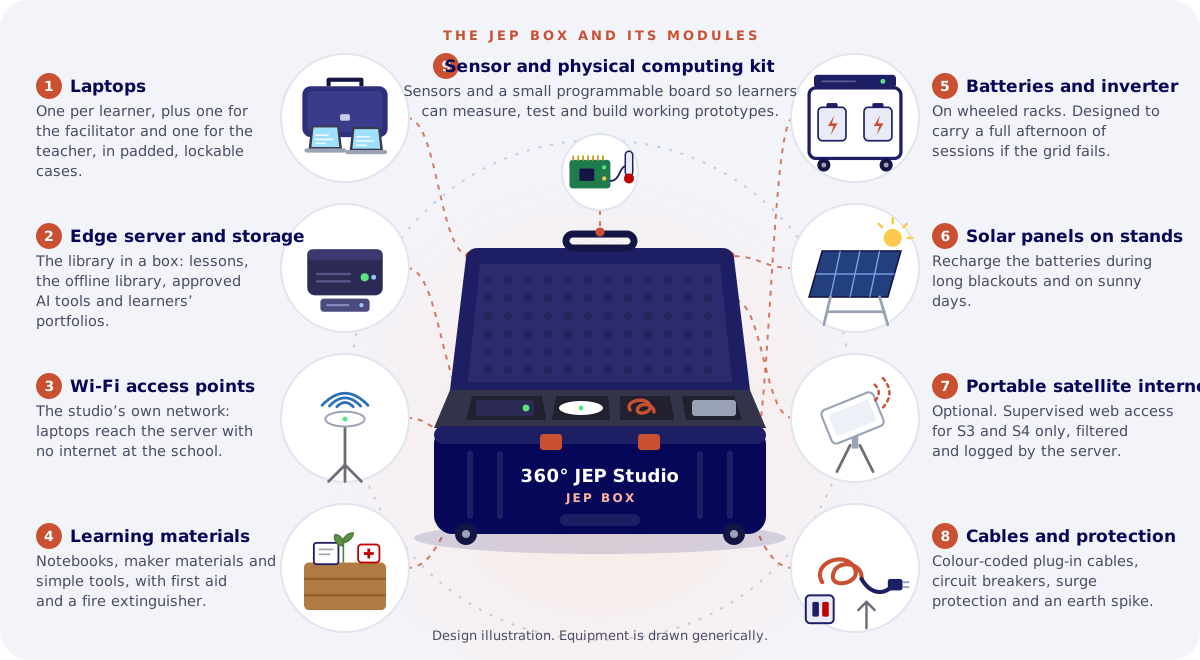
A complete studio in six portable modules, with its own edge server, Wi-Fi, power and laptops, that travels to partner schools, in Lite, Standard and Advanced sizes, with a sensor and physical computing kit.
See the kit, step by step

The full learning space, how it works with or without the Internet, and how it grows.
Design specification. It describes the Studio as designed, not equipment installed at Spectrum.
Local first: the first four layers run without the Internet; the last two need a connection.
EDGE is the offline digital layer of the Studio: the edge server, the local network and the link to the SXLA Central Hub/Edge. This page covers the whole learning space. Explore Offline Capabilities
Five services are essential from day one. Local AI and cloud services are added in stages.
JEP units for S1 to S4, session plans and learner activities.
Each learner’s project work and evidence of reasoning.
Reference material, textbooks and video, without internet.
Teachers score work against the six-capability JEP rubrics.
Secure log-in, content filtering and fair device sharing.
A narrow, supervised tutoring role, added in stages.
Remote mentors, research tools, advanced AI and encrypted backup.
When connectivity drops, capability steps down. Core learning continues in all three conditions.
Internet available
Full use: local resources plus online research, advanced AI, remote mentors, updates and backup.
Internet slow
Local resources first. Priority tasks use the link; large updates wait for quiet hours.
Internet unavailable
Lessons, library, portfolios and assessment continue on the local network. Online services pause.
Each module can be added or upgraded without rebuilding the rest. Every Studio also has the network, the JEP learning content and governance.
Includes: Laptops, peripherals and charging cabinets.
Grows by: More or better devices, and specialist workstations.
Includes: The server that runs the local learning environment.
Grows by: More memory, or a second server.
Includes: Mirrored drives for the library, portfolios and records.
Grows by: More drives when data reaches 70% of capacity.
Includes: Approved AI tools and the rules for their use.
Grows by: A graphics card, or a separate local AI server.
Includes: Space and a network reserved for future devices.
Grows by: Robotics kits, sensors, microcontrollers and fabrication, once a unit design exists.
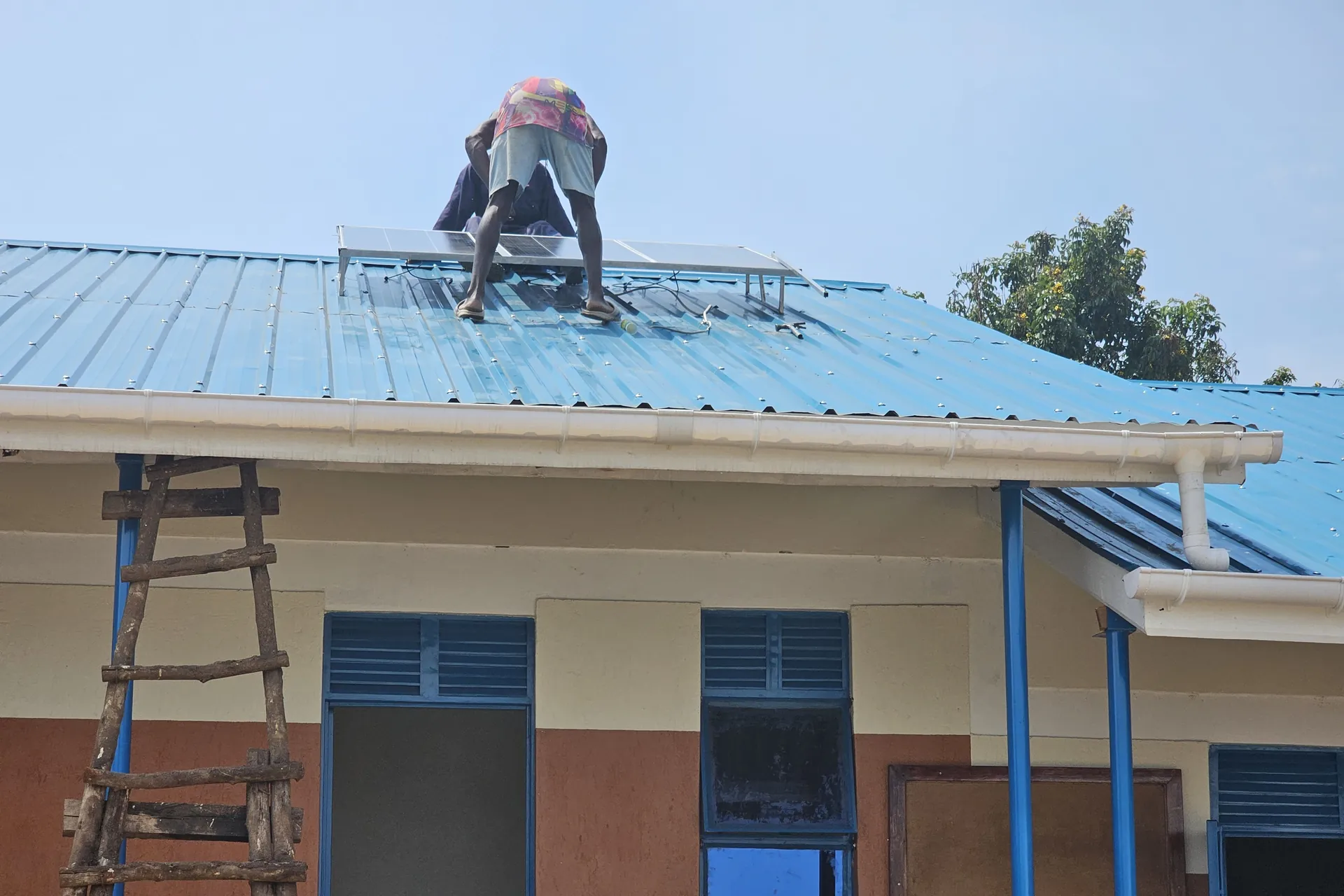
Includes: UPS, inverter, batteries and solar panels for critical loads.
Grows by: More panels and batteries, and monitoring.
Includes: A satellite or other internet gateway.
Grows by: A failover link and wider coverage.
The same modules combine into three configurations. All share the same governance and data protection.
| Module | Lite | Standard | Advanced |
|---|---|---|---|
| Computing | 10 to 20 laptops | About 40 laptops | 40 or more, plus specialist workstations |
| Edge | Small server or mini-PC | Edge server with mirrored storage | Edge server plus a local AI server |
| Network | Router and one or two access points | Firewall, managed switch, three access points | Wider coverage, faster switching |
| Power | UPS and small solar | UPS, hybrid inverter, expandable solar | Larger solar and battery bank, with monitoring |
| Connectivity | Mobile data or satellite internet | Satellite internet | Satellite internet plus failover |
| Learning | JEP curriculum and offline library | Full offline learning environment | Adds advanced content and tools |
| AI | Approved cloud AI where connected | Cloud AI plus selected local AI | Local AI and GPU capacity |
| Robotics and physical computing | None | Reserved space and network | Robotics, electronics, fabrication |
| Governance | Full policy set | Full policy set | Full policy set |
From SXLA’s Technology, Data Protection and Digital Plan, Annex 17. No vendor is named.
A complete studio in six portable modules, with its own edge server, Wi-Fi, power and laptops, that travels to partner schools, in Lite, Standard and Advanced sizes, with a sensor and physical computing kit.
See the kit, step by step
Build locally. Connect globally. Protect data. Expand modularly.
The Studio provides the tools. JEP gives learners a reason to use them.
Learners’ personal data stays on the school’s own server and never goes into public AI tools.
Encryption at rest, role-based access, audit logs and minimal data collection.
Parental consent for learners’ data, in line with Uganda’s Data Protection and Privacy Act 2019 and its Regulations.
Each school controls its own learner records. The SXLA Central Hub/Edge receives pseudonymised summaries only.
Offline use covers only what is stored in advance. Local AI depends on hardware, syncing on a connection, and security on care every term.
Design values only. SXLA’s documents give proposed minimums and design estimates, validated by a site assessment. This page makes no claims about speed, capacity, uptime, cost savings or the number of users served.
Donations help equip the Studio at Spectrum Secondary School, built to this specification. Donations are completed on the website of Spectrum TechLabs Alliance (STA), our US-based partner.

Why SXLA created JEP, and how learners move from a real challenge to knowledge, action and feedback.
Find out more

